
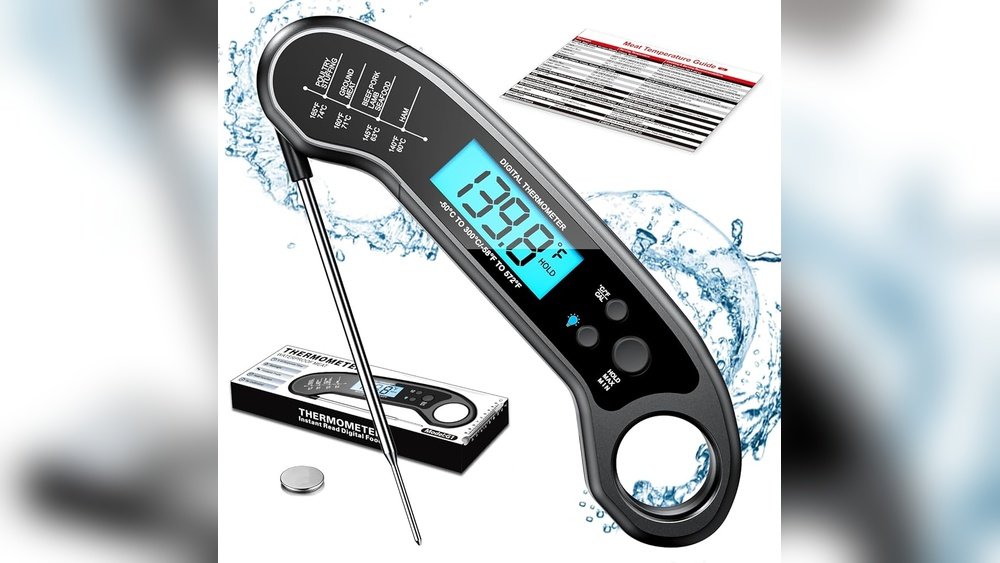
Have you ever wondered if your trusty meat thermometer can do more than check the doneness of a roast? Maybe you’re curious if it can measure the temperature of soups, sauces, or other liquids.
Knowing the answer could save you time and help you cook with greater confidence. You’ll discover exactly how a meat thermometer works with liquids, what to watch out for, and tips to get the most accurate readings every time. Keep reading—your kitchen skills are about to get a helpful upgrade!
How Meat Thermometers Work
Meat thermometers measure the temperature inside food to ensure it is cooked safely. They give quick and accurate readings. This helps avoid undercooked or overcooked meat.
These tools use different methods to sense heat. Each type works best in certain situations. Understanding how they work helps in using them correctly.
Types Of Meat Thermometers
There are several types of meat thermometers. Dial thermometers have a needle that moves on a dial. Digital thermometers show the temperature on a screen. Instant-read thermometers give fast results. Leave-in thermometers stay in the meat during cooking.
Each type has pros and cons. Dial thermometers are simple but slower. Digital ones are quick and easy to read. Leave-in types work well for ovens or grills.
Temperature Sensing Mechanism
Meat thermometers sense temperature using metal or electronic parts. Dial thermometers use a metal coil that expands with heat. This moves the needle on the dial.
Digital thermometers use sensors like thermistors or thermocouples. These sensors change their electrical signals with temperature. The device converts signals into numbers shown on the screen.
The probe tip must touch the food’s center. This gives the most accurate reading. Proper use ensures safe cooking and delicious results.

Using Meat Thermometers For Liquids
Meat thermometers are mainly for checking meat temperatures. Many wonder if these tools work well for liquids. Using a meat thermometer for liquids can help in cooking and safety. It shows if the liquid is hot enough or safe to consume. Yet, liquids behave differently than solid foods. This affects how the thermometer reads temperatures.
Accuracy In Liquid Measurement
Meat thermometers can measure liquids, but accuracy varies. Liquids move and swirl, making steady readings hard. The thermometer’s probe must be fully submerged. If not, the reading may be wrong. Stirring the liquid helps get a better result. Slow changes in temperature are easier to track. Fast boiling or cooling liquids can confuse the sensor.
Common Liquids Tested
Many use meat thermometers for soups, sauces, and stews. Hot drinks like coffee and tea can also be checked. Some cooks test water for boiling or cooling. Broths and stocks need temperature checks for safety. These liquids are thick or thin but usually clear. The thermometer must be cleaned well after use to avoid flavors mixing.
Limitations And Challenges
Meat thermometers are not made for all liquids. Thin liquids can splash and cause burns. Thick liquids might stick to the probe and block heat. Some thermometers react slowly in liquids. The design may not protect the sensor from moisture. Digital thermometers need careful handling around liquids. Using the right tool for liquids ensures better safety and accuracy.
Alternatives For Measuring Liquid Temperature
Measuring the temperature of liquids needs tools made for that task. Meat thermometers often do not work well with liquids. They can give wrong readings or get damaged. Different thermometers suit liquid temperature checks better. These tools provide quick and accurate results for cooking or science needs.
Digital Thermometers
Digital thermometers show temperature on a clear screen. They have metal probes that go into the liquid. These probes heat up to match the liquid’s temperature. Digital thermometers are easy to use and read. They work well for soups, milk, and other fluids.
Infrared Thermometers
Infrared thermometers check temperature without touching the liquid. They read the heat that the liquid gives off. Point the device at the liquid’s surface to get a quick number. These thermometers work best for hot liquids or when hygiene matters. They do not measure inside the liquid, just the surface.
Thermocouples And Thermistors
Thermocouples and thermistors are sensors used for precise temperature readings. Thermocouples work by measuring voltage changes from heat. Thermistors change resistance as temperature changes. Both types can be part of digital tools. They are good for scientific or careful cooking use.
:max_bytes(150000):strip_icc()/how-to-use-meat-thermometer-GettyImages-1330139635-91da8d92d7ab4711aa195e6f674ed7ac.jpg)
Safety Tips When Measuring Liquids
Measuring the temperature of liquids with a meat thermometer requires care. Safety is key to avoid illness and ensure accurate readings. Follow simple rules to keep your kitchen safe and clean.
Avoiding Cross-contamination
Never use the same thermometer probe for raw meat and liquids without cleaning. Bacteria from raw meat can spread to liquids easily. Use separate thermometers or clean the probe well before measuring liquids. Always avoid touching other food items with the probe after it touches raw meat.
Proper Cleaning Techniques
Wash the thermometer probe with hot, soapy water after each use. Rinse it well to remove all soap. Sanitize the probe using a food-safe sanitizer or a solution of one tablespoon bleach in one gallon of water. Dry the probe with a clean towel or let it air dry before the next use. Proper cleaning keeps your food safe and the thermometer working well.
Expert Recommendations
Experts offer clear advice on using meat thermometers for liquids. Understanding their guidance helps you get accurate temperature readings. It also keeps your cooking safe and precise.
Best Practices
Use a digital meat thermometer for quick and clear readings. Insert the probe fully into the liquid to get an accurate result. Stir the liquid gently before measuring to spread heat evenly. Avoid touching the pot or pan with the probe tip. Clean the thermometer after each use to prevent cross-contamination.
When To Choose Specialized Thermometers
Choose a liquid thermometer for thin or delicate liquids like tea or milk. Specialized thermometers react faster and are easier to clean. They often have a longer probe to reach deeper in large pots. Use candy or deep-fry thermometers for hot sugar or oil. They handle higher temperatures safely and accurately.
:max_bytes(150000):strip_icc()/ses-candy-thermometer-test-goodcook-classic-irvin-lin-02-7a189ec81afd457c9a60e42dc949bde7.jpg)
Frequently Asked Questions
Can A Meat Thermometer Measure Liquid Temperatures Accurately?
Yes, a meat thermometer can measure liquid temperatures. However, it is designed for solids, so results may vary. Use a probe thermometer for better liquid accuracy.
What Types Of Thermometers Are Best For Liquids?
Digital probe thermometers or instant-read thermometers work best for liquids. They provide quick, accurate readings and are designed for liquids and solids.
Can I Use A Meat Thermometer For Soups?
You can use a meat thermometer for soups, but ensure the probe is fully submerged. Stir the soup for even temperature readings.
How To Clean A Meat Thermometer After Measuring Liquids?
Clean the probe with warm, soapy water and dry it thoroughly. Avoid submerging electronic parts to prevent damage.
Conclusion
A meat thermometer can measure liquids, but with limits. It works best in thick liquids like soups or stews. Thin liquids may give less accurate readings. Always insert the thermometer properly to get a good result. Keep the thermometer clean to avoid flavors mixing.
Using the right tool helps cook food safely and well. Remember, a meat thermometer is mainly for solid foods. For precise liquid temperatures, consider a digital or candy thermometer. Choose the right tool for the best cooking experience.

