
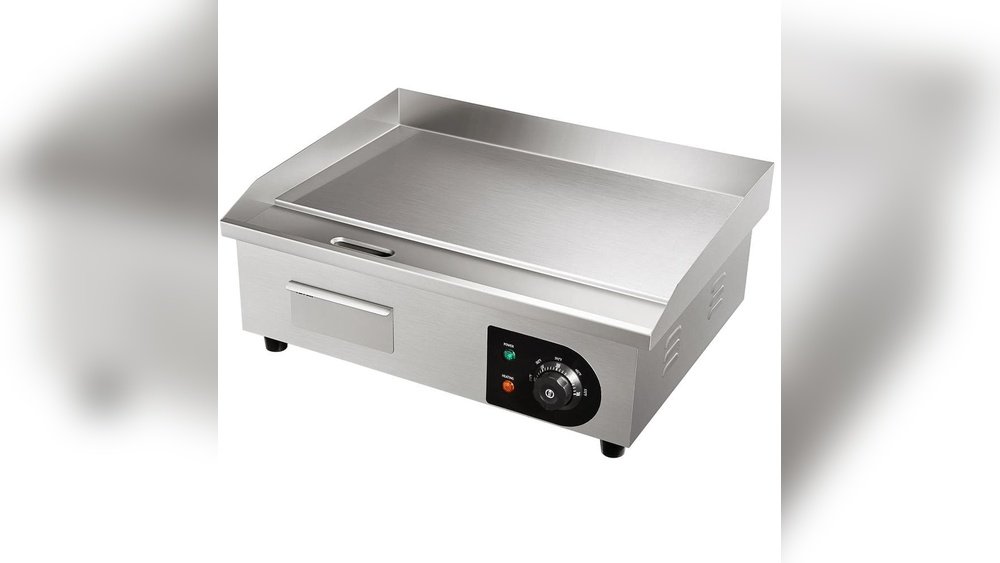
Are you curious about how much electricity your electric griddle really uses? Whether you’re cooking breakfast for your family or preparing a quick meal, knowing the energy cost can help you save money and reduce waste.
You’ll discover the simple facts about electric griddle power use and learn easy tips to keep your energy bills low. Keep reading to find out how your cooking habits might be affecting your electricity bill more than you think!

Electric Griddle Power Basics
Understanding the power basics of an electric griddle helps in managing electricity use. Knowing the wattage, voltage, and current gives insight into how much energy the griddle consumes. This knowledge can help reduce electricity bills and improve appliance usage.
Typical Wattage Range
Electric griddles usually have wattage between 1200 and 1800 watts. Some smaller models may use less power, around 1000 watts. Higher wattage means the griddle heats up faster but uses more electricity. Choosing the right wattage depends on cooking needs and energy efficiency.
Voltage And Current Factors
Most electric griddles run on standard household voltage, about 120 volts in the US. The current drawn depends on the wattage and voltage. For example, a 1500-watt griddle at 120 volts uses about 12.5 amps of current. Understanding these factors helps in checking if your home wiring supports the griddle safely.
Calculating Electricity Consumption
Calculating electricity consumption helps you understand your electric griddle’s energy use. This knowledge lets you manage your electricity bills better. You can see how much power your griddle uses during cooking. Simple math turns watts and usage time into kilowatt-hours, the unit your electric company uses.
Estimating Usage Time
First, find out how long you use the griddle. Write down the minutes you cook each day. Multiply this by the number of days you use the griddle in a month. This total is your monthly usage time in minutes. Convert minutes to hours for easier calculations. Divide the total minutes by 60 to get hours.
Converting Watts To Kilowatt-hours
Check the wattage on your griddle’s label. Watts show how much power the griddle uses per hour. To find kilowatt-hours, divide watts by 1,000. This changes watts to kilowatts. Then multiply kilowatts by hours used. The result is kilowatt-hours, or kWh. This number shows the energy your griddle consumes. Use kWh to estimate cost by multiplying with your electricity rate.
Cost Analysis Of Running An Electric Griddle
Understanding the cost of running an electric griddle helps manage your kitchen budget. This section breaks down the expenses related to electricity use. It shows how rates and usage time affect your monthly and yearly costs. Knowing these details helps you plan better and avoid surprises on your bill.
Electricity Rates Impact
Electricity rates differ by location and provider. Some areas charge more per kilowatt-hour (kWh) than others. The higher the rate, the more it costs to run your griddle. For example, a rate of $0.12 per kWh is common in many places. If your griddle uses 1500 watts, it will cost more in areas with higher rates. Checking your local electricity rate gives a clearer cost picture.
Monthly And Annual Cost Estimates
Estimating costs depends on how often you use the griddle. Using it for one hour daily adds up over time. A 1500-watt griddle running for 1 hour uses 1.5 kWh. At $0.12 per kWh, that costs about $0.18 per day. Over a month, this totals around $5.40. In a year, expect to pay about $65. These numbers vary with usage and rates. Adjust calculations to fit your habits and local prices.

Energy Efficiency Tips
Saving energy while using an electric griddle helps reduce electricity bills and environmental impact. Simple habits and smart choices can cut power use without losing cooking quality. These energy efficiency tips help you get the most from your griddle.
Optimal Cooking Practices
Preheat the griddle only for a short time. Long preheating wastes electricity. Use the right temperature for your food. Avoid setting the heat too high. Cooking multiple items at once saves power. Cover food with a lid to keep heat in. Turn off the griddle a few minutes before finishing. Residual heat will complete cooking without extra energy.
Choosing Energy-saving Models
Look for griddles with good insulation. They keep heat better and use less power. Select models with adjustable temperature controls. This avoids overheating and saves energy. Smaller griddles use less electricity for small meals. Check the wattage: lower wattage means less power use. Energy-efficient designs cost less to run over time.
Comparing With Other Cooking Appliances
Understanding how much electricity an electric griddle uses helps compare it with other kitchen appliances. This comparison shows which device uses energy more efficiently during cooking. It also helps you decide what appliance suits your needs and budget.
Electric Griddle Vs. Stove
Electric griddles usually use between 1200 and 1800 watts. Stoves, especially electric ones, use about 2000 to 3000 watts. This means stoves often consume more electricity than griddles.
Griddles heat a flat surface evenly. They cook food faster and use energy more directly. Stoves heat pots and pans, which can lose heat to the air. This may cause longer cooking times and more energy use.
For small meals or simple cooking, an electric griddle can save electricity. Stoves are better for larger meals and more varied cooking.
Electric Griddle Vs. Microwave
Microwaves use around 600 to 1200 watts, less than electric griddles. Microwaves cook food quickly by heating water molecules inside the food. This method is energy-efficient for reheating or simple cooking.
Electric griddles take longer but cook food evenly with a crisp texture. They use more electricity but deliver different cooking results.
Choosing between a griddle and a microwave depends on the food type and cooking style. Microwaves save energy for reheating. Griddles work better for grilling and frying.
Smart Usage For Big Savings
Using an electric griddle smartly helps save electricity and money. Small changes in how you use it make a big difference. Controlling heat and time avoids wasting power. Keeping the griddle clean keeps it working well and uses less energy.
Timer And Temperature Controls
Set the timer to turn off the griddle automatically. This stops it from running longer than needed. Use temperature controls to cook at the right heat. Avoid high heat if lower works fine. Lower heat saves electricity and prevents burning food.
Maintenance For Efficiency
Clean the griddle surface after each use. Dirt and grease make it work harder. Check the power cord and plug for damage. Fix any problems quickly to keep it safe. Regular cleaning and care keep the griddle efficient. This lowers electricity use and extends its life.
Frequently Asked Questions
How Much Electricity Does An Electric Griddle Consume?
Electric griddles typically use between 1,200 to 1,500 watts per hour. Usage varies with temperature settings and cooking duration, affecting total electricity consumption.
Does Using An Electric Griddle Increase My Energy Bill?
Yes, frequent or prolonged use raises your energy bill. However, efficient use at moderate temperatures can minimize electricity costs.
How Can I Reduce Electricity Use With An Electric Griddle?
Use the griddle only as long as needed. Cook multiple items at once and avoid high heat settings to save energy.
Is An Electric Griddle More Energy-efficient Than A Stovetop?
Electric griddles often use electricity more efficiently than gas stovetops. They provide even heating and faster cooking times, reducing overall energy use.
Conclusion
Electric griddles use a moderate amount of electricity. Their power depends on size and temperature. Cooking for shorter times saves energy. Turning off the griddle when done helps too. Choosing the right model can lower electricity costs. Knowing this helps you cook smart and save money.
Small changes make a big difference in energy use. Keep an eye on how long you cook. Simple habits can reduce your electricity bill. Enjoy cooking with your griddle, without worry.

